Series Retrospective: Capture the memories of the ever-evolving world of Pokemon starting with Red and Blue and ending with a special look at the upcoming Diamond and Pearl versions.

Unless you have been hiding under a rock, or perhaps a very large Geodude, you've surely heard of Pokemon and its phenomenon that has swept Japan, invaded the U.S., and hasn't shown signs of slowing down. Nintendo's multi-billion dollar role-playing franchise is now older than many of its younger players, meaning that not everyone has grown up (or evolved) with the series from the beginning. For these rookie trainers and for every Pikachu-loving veteran of the series, let's take a minute to recapture the memories of Pokemon before upcoming versions Diamond and Pearl expand the creature-filled universe once more.
Who's that Pokemon (Creator)?
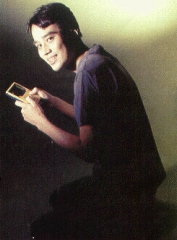
Pokemon is the creation of Satoshi Tajiri, who collected bugs as a Japanese boy and began a modest, hand-stapled tips and tricks magazine as a teenager. He combined his fascination of insects and his love of video games when he saw Game Boy for the first time and became inspired by its link cable capabilities. Early handheld titles had restricted its use to competition, but Tajiri imagined creatures moving back and forth across the cable. This unique concept began to take shape in 1989 when he founded Game Freak, a development team named after his handwritten magazine publication, but better known today as the company behind the Pokemon video games.
After more than six years in development, Poketto Monsutaa debuted in Japan where Nintendo published and released the Game Freak creation in February 1996. Poketto Monsutaa is translated to Pocket Monsters in English, but that would have to change to the popular contraction Pokemon once the game was exported to other countries. This was because in the 1990s, Morrison Entertainment Group established a brand called УMonsters in My Pocket,Ф which sounds similar to Pocket Monsters. However, despite Nintendo's name change, Morrison sued anyway and lost.
At first, Japanese Game Boy owners were the only ones collecting, training and trading their Pocket Monsters as Tajiri had imagined. There, the popular new Nintendo franchise released with more than unique trading connectivity gameplay. There were two versions of the game, Red Version and Green Version, with subtle differences. In an effort to spur linking up, Game Freak included eleven exclusive Pokemon in each version so that players would be required to use a link cable to collect all 151. Two years later when Pokemon was unleashed on North America in September 1998, it also came in two editions: Red Version and Blue Version.
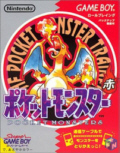
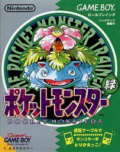
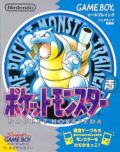
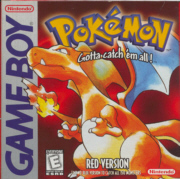
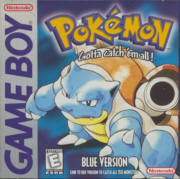
Little known fact: Japanese gamers received a Blue Version, too. It came out shortly after their Red and Green versions and contained improved graphics and glitch fixes. From this, other territories received the same graphics. However, almost everyone thinks that Green was replaced by Pokemon Blue and that it's exclusive to the non-Japanese countries; you can impress you Poke Pals with that bit of knowledge.
The rest of the monsters, with the exception of the two starters not chosen, could be captured by going through the role-playing story in either version. It started out with players naming their trainer, naming his or her trainer's rival and visiting the rival's grandfather, Professor Oak. The default name of the protagonist would be the color of the version, so in the Red Version, it would be Red. The rival's default name would be the opposite color. However, most players decided to personalize the names since the non-playable characters would typically address them by name during dialogue.
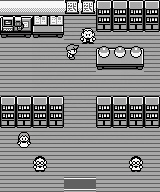
Once names were chosen and Professor Oak was seen, players would begin a quest to become the best Pocket Monsters trainer that the Kanto region had to offer. They would also be tasked with filling out the Pokedex, a digital encyclopedia of monsters. Immediately after acquiring this useful tool from the professor, players could choose between three Pokemon Balls, or Poke Balls, that contained the starter monsters Bulbasaur, Charmander and Squirtle. The two not chosen had to be obtained via link cable trading since they could not be captured normally.
It was possible for players to possess more than one of the chosen starter monsters only by trading. However, clever Pokemon capturers would quickly find an even easier loophole. They would just ask a new player to start the game, select one of the starters they did not own, trade them that starter and restart the game again to repeat the process for the other missing monster. If that new Pokemon player was smart, they would make sure to give the recipient two of each starter needed so that they could trade back a set and possess all three monsters as well.
While the starter monster was a given, the remaining Pokemon had to be earned by capturing them in the wild. Randomly initiated fights occurred between up to six of a player's Pokemon and one wild creature. This ratio made for easy wins to boost each Pokemon's experience points in order to evolve the creature to its next stage. Often, though, players would want to avoid causing the enemy Pokemon to faint (they did not die as Tajiri wanted to create a non-violent video game). Instead, they would want to make it vulnerable enough to capture with a bought or acquired Poke Ball. Successfully containing it in this ball brought that Pokemon on to the player's team.
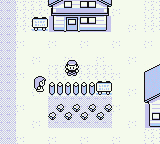
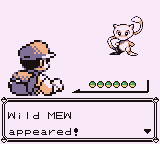
It was always wise to keep a variety of Pokemon types (water, fire, bug) on hand to avoid being overmatched by having all fire Pokemon verses a water-based opponent. But, for the most part, the gameplay was straightforward and did not challenge its players in battle as much as it amazed them with intricate creature designs and new discoveries. Going through from the hometown of Pallet Town to the Elite Four in the Pokemon Championship was the easy part, but it took time. In between, there were eight gym bosses to challenge for merit badges, a bunch of side quests to go on and even - cover your children's ears - gambling! Although it was a big distraction, gambling did not lead to crime in this non-violent game or Pokestitution like theories always claim. It was part of the game's endless hours of fun from beginning to end.













 World of Goo 2 Arrives on PlayStation 5 and PC
 Frostpunk 1886 Revealed by 11 Bit Studios
 Nintendo Switch eShop Weekly Updates Adds Over 40 Games to the Catalog
 Clair Obscur: Expedition 33 Now Available on Console and PC
 Mouse: P.I. For Hire Trailer Released Showing Off Key Features
 Ninja Gaiden Ragebound Arrives This Summer on All Platforms
 Star Overdrive Arrives on Xbox, PlayStation, and PC in A Few Months
 Mario Kart World Direct Presentation Arrives Before Nintendo Switch 2 This June
 Bionic Bay Arrives on PlayStation and PC via Steam